


Willkommen auf der Homepage der Arbeitsgruppe von Prof. Dr. A. C. Filippou
Anorganische Molekülchemie, Organometallchemie
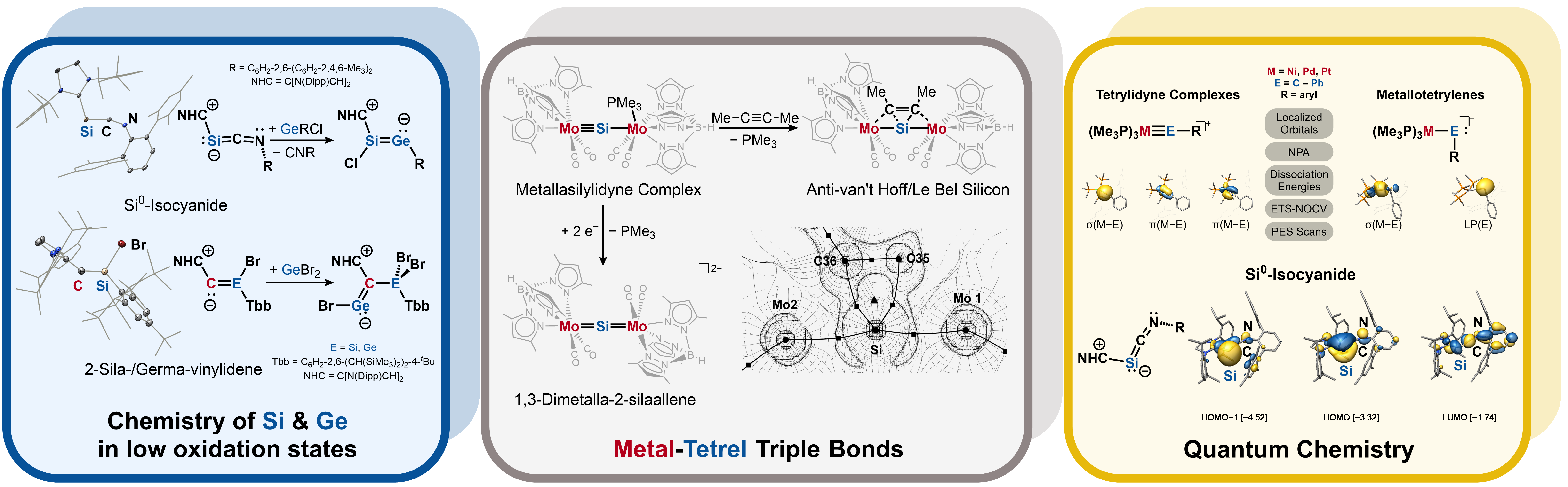
AC-Kolloquium am 18.04.2024: "Transition Metal – Group XIV Element Multiple Bonds: Theoretical Investigations of Group 9 Tetrylidyne and Bis-Tetrylidyne Complexes"⠀
AC-Kolloquium am 11.04.2024: "Rational design of phosphorus centered biradicals" ⠀
Umfassende Untersuchung der elektronischen Struktur kationischer Tetrylidinkomplexe
Ursprünglicher Artikel von ChemistryViews | 9. September 2021
Cyano- und Isocyanosilylene (z.B. Si(CN)H und Si(NC)H) sind hochreaktive Spezies, die z.B. in der interstellaren Chemie vorkommen. Aufgrund ihrer Instabilität sind sie schwer zu untersuchen. Nur einige ihrer möglichen Isomere konnten bisher beispielsweise in Argonmatrizen dargestellt werden. Isomere des Typs Si=C=N-H sind bisher schwer zu finden. Sperrige N-heterozyklische Carbene (NHCs) wurden bereits zur Stabilisierung anderer reaktiver, niedrig koordinierter Siliziumverbindungen verwendet und ermöglichen somit deren detaillierte Untersuchung.
Forschungsgebiete
Die Forschung in der Filippou-Gruppe fokussiert sich auf die Bereiche der modernen molekularen Übergangsmetall- und Hauptgruppenelementchemie und kombiniert das Potenzial beider Bereiche, um neue Verbindungen mit noch nie dagewesener Bindung und Reaktivität zu schaffen. Der Schwerpunkt liegt auf der Isolierung und Charakterisierung hochreaktiver geschlossen- und offenschaliger Moleküle, die Silizium, Germanium und Übergangsmetalle in neuartigen Bindungsumgebungen enthalten, und der Erforschung der Fähigkeit dieser Verbindungen, neue Materialien in stochiometrischen oder katalytischen Reaktionen zu erzeugen. Um diese Ziele zu erreichen, werden hochentwickelte synthetische Methoden sowie modernste analytische und rechnerische Verfahren eingesetzt.
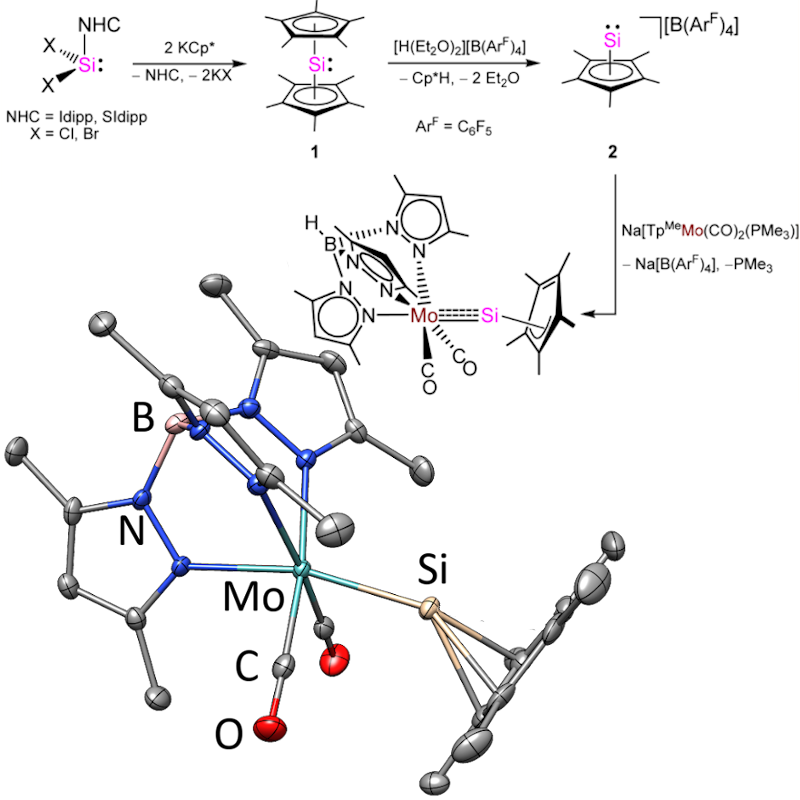
Dreifachbindungen von Si - Pb mit Übergangsmetallen
Wir erforschen seit über 20 Jahren die Chemie von Tetrelylidin-Komplexen der allgemeinen Formel LnM≡ER, wobei M ein Übergangsmetall, Ln eine Ligandensphäre, E = Si - Pb und R ein Organylsubstituent ist.
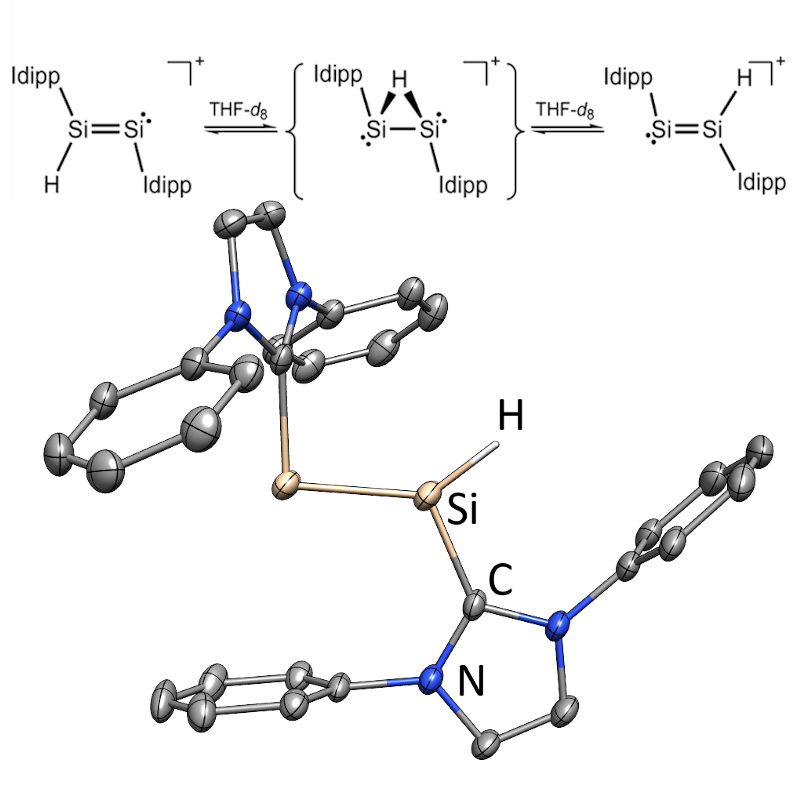
Niedervalente Siliziumchemie
Aufgrund seines großen natürlichen Vorkommens ist Silizium als allgegenwärtiger Bestandteil in technologisch wichtigen Materialien ein Element mit hohem Zukunftspotential. In unserer Arbeitsgruppe wollen wir neuartige, hochreaktive Siliziumverbindungen zähmen und erforschen.
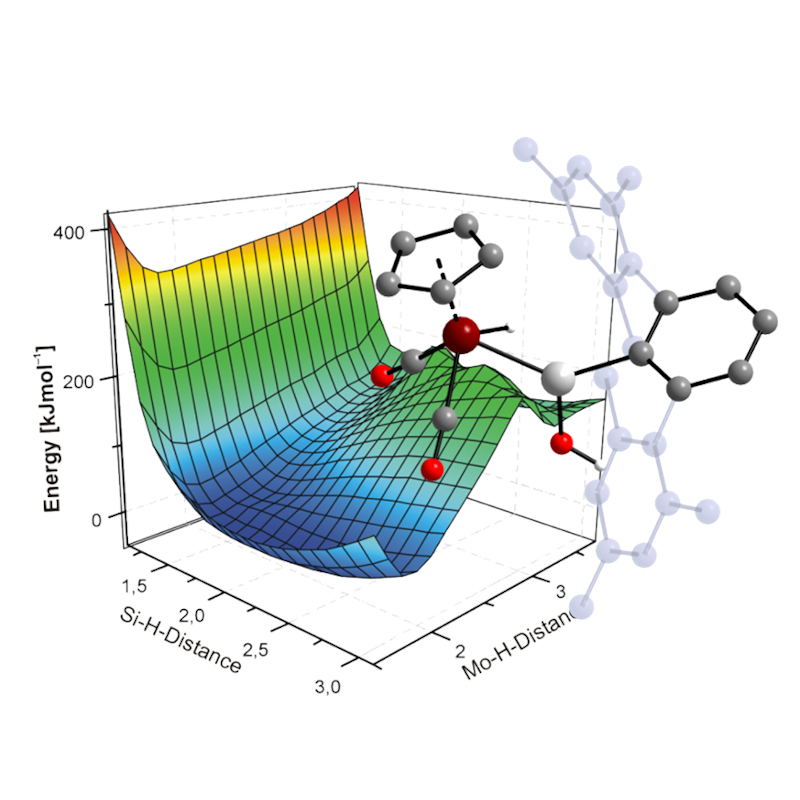
Quantenchemie
Unsere Forschung wird mit neuesten computerchemischen Methoden unterstützt um einen tieferen Einblick in die Eigenschaften der bei uns erforschten Verbindungen zu erhalten und um Reaktivitäten vorherzusagen und/oder zu erklären.